Joya de Cerén: The Pompeii of the Americas—If You Know How to Look
A visit to Joya de Cerén reveals an ordinary Maya village frozen by volcanic ash, offering an intimate, quietly powerful glimpse into daily life in ancient El Salvador—less spectacle than Pompeii, but every bit as unforgettable.
1/24/2026
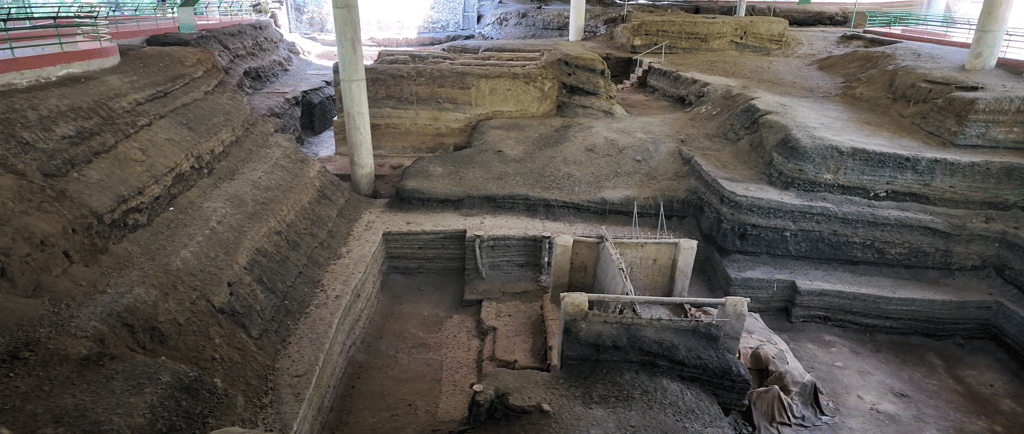
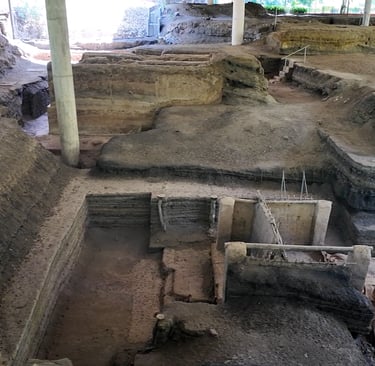
If you love history, chances are you already know Pompeii and Herculaneum—two Roman cities frozen in time by the catastrophic eruption of Mount Vesuvius in 79 CE. The ash that ended thousands of lives also preserved them in astonishing detail, gifting the modern world an unparalleled glimpse into ancient daily life.
Pompeii and Herculaneum are famous.
But what if I told you the Americas have their own version—one just as intimate, just as haunting, and far less known?
Welcome to Joya de Cerén, often called the Pompeii of the Americas—a Maya village preserved not in marble and plaster, but in ash, soil, and silence.
A Village, Not a Palace
Joya de Cerén lies about 20 miles northwest of San Salvador, near the town of Sitio del Niño, roughly halfway to Santa Ana. The drive is easy, the roads smooth, and the transition from city to countryside feels almost meditative.
Entry costs $11 (cash preferred, cards accepted), and before you even reach the ruins, the on-site museum quietly reorients your expectations.
This is not a site of kings.
This is a village.
The museum’s scale model makes that immediately clear: homes, kitchens, storage buildings, gardens, workspaces—everything laid out with intention. This wasn’t chaos interrupted by disaster; it was a functioning, thoughtful community.
And then there are the artifacts.
Not ceremonial treasures, but life: corn, cassava, agave—plants once growing, harvested, and cooked. Pottery shaped for use, not display. Grinding stones worn smooth by daily meals. Jewelry small enough to be personal. Obsidian knives still sharp enough to feel dangerous.
All of it survived because volcanic ash moved faster than decay.
When the Earth Intervened
Joya de Cerén was first settled during the Maya Preclassic period around the 3rd century BCE. Life here unfolded quietly—until it didn’t.
Sometime in the 5th or 6th century CE, the nearby Ilopango volcano erupted with cataclysmic force. Ash and fire shot nearly 20 miles into the sky, collapsing the volcano into a caldera that would eventually become Lake Ilopango.
Agriculture across the region failed. Communities scattered. Entire landscapes were rewritten.
After Ilopango, Joya de Cerén was reoccupied during the Maya Classic period—but that chapter ended too. In the 7th century CE, the Loma Caldera erupted, burying the village once more. This time, no one returned.
Unlike Pompeii, no bodies were frozen mid-escape. Archaeologists believe the roughly 200 residents had enough warning to flee—perhaps signaled by earthquakes or smoke. The only human remains found here belong to people buried long before the eruption.
Life escaped. Life stayed behind.
Walking Through Frozen Routine
Joya de Cerén covers just over 10 acres, with around 20 structures identified, half of which remain unexcavated beneath layers of ash.
The site is divided into three main areas:
Area 3: Fields, Cacao, and Community
This northeastern zone reveals agricultural life—fruit trees, milpas, trash pits, and most notably, cacao. Sacred, medicinal, and used as currency, cacao here was both sustenance and status.
Nearby stands the Communal House, the largest structure on site, built from rammed earth and topped with a thatched roof. Around 30 people could gather here to debate, decide, and govern village life.
Next door is the storage building—the pantry. Inside were corn baskets, grinding stones, obsidian blades, bone needles, seeds, gourds of ash, and ceramic dishes with food still inside. Not treasure—but priceless.
Area 2: Cleansing and Renewal
This southeastern section focused on maintenance and purification. The highlight is the temazcal, or sweat lodge—a low, domed structure where heated volcanic stones created thick steam.
More than a spa, the temazcal symbolized rebirth. Enter burdened. Endure the heat. Leave transformed.
Area 1: Home, Ritual, and Meaning
The northwestern zone was the village’s heart. Homes, kitchens, ritual spaces, and fields existed side by side.
One modest house belonged to artisans—pottery tools, clay with footprints, cotton-working equipment, and stone tools tell that story. In storage, archaeologists found a duck tied to a wooden rod—the only domesticated animal ever discovered here.
The kitchen reveals masa production—corn dough for tortillas, tamales, and yes, pupusas. Hearthstones formed a sacred triangle tied to Maya creation beliefs. Cooking here was both practical and cosmic.
Nearby ceremonial structures suggest fertility rituals tied to corn and harvest cycles. In the House of the Shaman, figurines, shells, antlers, and divination tools reveal a spiritual life deeply woven into daily existence.
Not Pompeii—And That’s the Point
Pompeii shows us how people died.
Joya de Cerén shows us how people lived.
If you arrive expecting grand temples or dramatic human casts, you’ll be disappointed. Only Pompeii is Pompeii. But if you come with an open mind—ready to see life paused mid-routine—this place will captivate you.
Here, history isn’t monumental.
It’s intimate.
Where the Day Ends
After leaving the site, I settled into a quiet suburban stay nearby—simple, comfortable, air-conditioned (the real luxury), complete with a hammock that clearly won the battle for garage supremacy.
Dinner was humble, delicious, and mildly cheesy despite my best vegan intentions. And as I walked away, exhausted, I forgot my phone—only to have the waiter sprint after me to return it.
He could’ve done anything with it.
Instead, he ran.
That, honestly, is El Salvador in a nutshell.
Final Thoughts
People call Joya de Cerén the Pompeii of the Americas. That comparison helps—but only if you let it.
This isn’t a spectacle of death.
It’s a portrait of life.
And if you let it be exactly what it is—a village paused in time—it may stay with you far longer than ruins built for emperors ever could.
Vlogs
Watch the stories that unfold beyond words and photographs.
© 2026. All rights reserved.

Subscribe