La Unión: Where the Land Ends and the Water Begins
A journey to La Unión reveals smooth highways, quiet streets, and the raw reality of reaching El Salvador’s southernmost edge. From a simple seaside stay to the volcanic beauty of the Gulf of Fonseca, this story explores what happens when the romance of “no tourists” meets the honest, unfiltered rhythm of real life at the end of the road.
2/28/2026
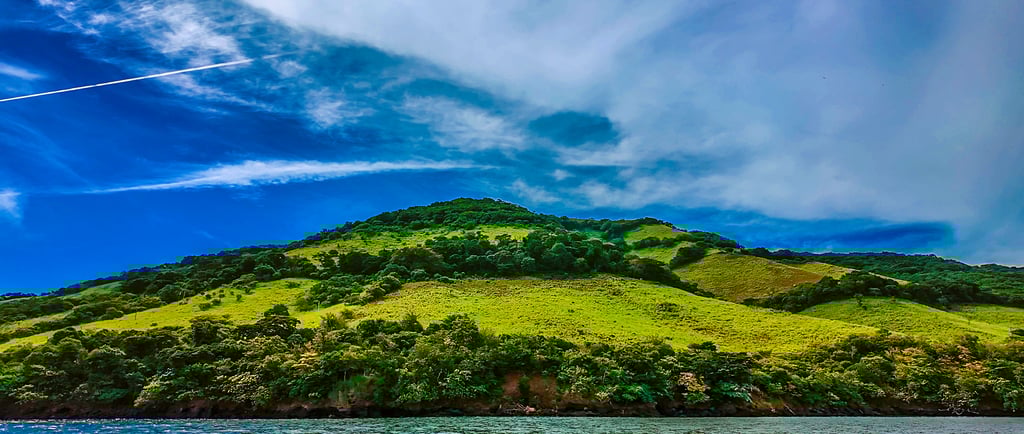
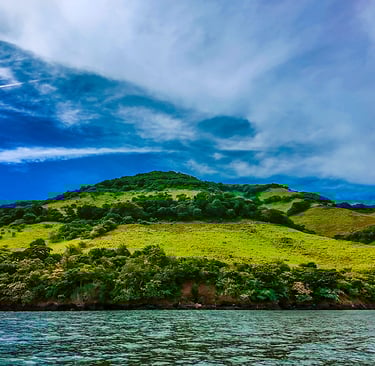
Today I’m heading toward the southern edge of El Salvador — to La Unión, a place where the country quite literally runs out of road.
And in fairness, this drive deserves praise.
For much of the journey, I’m traveling along the legendary Pan-American Highway — the longest road network in the world, stretching nearly 19,000 miles from Alaska to Argentina. It links North, Central, and South America into one continuous ribbon of pavement.
Here in El Salvador, that ribbon is smooth. Calm. Generous.
Trees line the highway. The scenery opens wide. And when traffic allows, you’re given rare moments to lift your eyes from the asphalt and realize just how breathtaking this country truly is.
Bienvenidos a La Unión
Welcome to La Unión.
(It looks like “La Union,” but don’t you dare say it that way.)
You know how every tourist and every YouTuber says:
“I want to go somewhere with no tourists. Somewhere no one speaks English.”
Let me gently suggest something.
You have romanticized that idea.
Because I am living it.
And while it’s authentic… it’s also very quiet.
There’s El Espíritu de la Montaña, and there’s the Gulf of Fonseca.
And that’s… largely it.
My Apartment at the Edge of the Country
Before exploring the gulf, I want to show you where I’m staying.
The studio apartment is attached to my hosts’ home — essentially a cozy in-law suite tucked behind a gated carport. Simple. Secure. Functional.
Inside, the lighting leaves much to be desired — but we adapt.
The layout is open and practical: sofa, kitchenette, and bed sharing one lived-in space. A microwave and fridge (very thoughtful). A coffee maker (completely unused). A television (untouched).
But the WiFi?
Lightning fast.
That’s the real luxury.
There’s an en-suite bathroom — no hot water, but that’s part of the El Salvador experience. Out back, a small garden with lush plants and shared seating offers a quiet place to breathe before heading toward the sea.
All in all, a pleasant stay. Click here for the listing.
A City of Function, Not Fantasy
La Unión is El Salvador’s final outpost before the Pacific. Once called Puerto San Carlos, it was renamed after independence from Spain.
Today, roughly 34,000 people call it home.
It is not picturesque in the Instagram sense.
It is busy. Practical. Purposeful.
The locals clearly have somewhere to be.
As a tourist?
Not so much.
The Hunt for Food
My first mission: find a café.
Simple.
Except every café listed on Google Maps had permanently exited the chat.
Gone.
Vanished.
A historical archive of caffeine dreams.
Food became Plan B.
I found Restaurante El Dragón (a Chinese restaurant) serving tofu — and I will not pretend I didn’t feel emotional about it. I have missed tofu. Deeply. Spiritually.
For additional comfort, I retreated to Comfort Inn Real La Union Hotel (an American hotel chain restaurant) offering Olive Garden–level Italian food with a few vegan options.
A warm, garlicky hug.
Driving in La Unión: Advanced Mode
The roads here are excellent.
No potholes. No rivers.
But…
There are four-way intersections without stop signs. One-way streets that are not marked as one-way. Two-way streets that suddenly decide they are one-way now.
Driving isn’t impossible.
It’s just… improvisational.
Where the Land Ends
Beyond this town, the land simply stops.
There is no farther south to travel in El Salvador without taking to the water.
So I booked a private boat tour.
The experience ultimately fell short — enough that I disputed the charge and received a full refund. I won’t name the company.
I won’t pretend it didn’t cast a small shadow.
But I’m here.
And I intend to see the gulf.
The Gulf of Fire and Water
Once on the boat, the horizon opens wide across the Gulf of Fonseca — a shimmering stretch of Pacific Ocean spanning over 1,200 square miles.
Just slightly smaller than Rhode Island.
But this is no ordinary gulf.
This is the Ring of Fire — even in water.
The Gulf of Fonseca is a volcanic archipelago, dotted with 34 islands and rimmed by volcanoes rising from El Salvador, Honduras, and Nicaragua.
From the water, you glimpse:
The Port of La Unión
Punta Chiquirín
The Calvo tuna factory
The slopes of Conchagua Volcano crowned by El Espíritu de la Montaña
Islands like Conchaguita, Martín Pérez, Meanguera, and Zacatillo
The distant shores of Honduras and Nicaragua completing the horizon
It is a meeting place of borders.
Of land and sea.
Of fire and water.
Would I Return to La Unión?
La Unión is not a polished tourist destination.
It is not curated.
It does not perform.
It simply exists — at the edge of a country, at the edge of the continent, at the edge of expectation.
And sometimes, that is enough.
Would you visit La Unión?
Let me know.
And if you’ve made it this far — thank you for traveling with me.
Vlogs
Watch the stories that unfold beyond words and photographs.
© 2026. All rights reserved.

Subscribe