Lake Ilopango: Beauty Born From Apocalypse
A tranquil boat ride on Lake Ilopango reveals a breathtaking landscape born from one of history’s most catastrophic volcanic eruptions, where beauty, memory, myth, and fire quietly coexist beneath calm waters.
1/10/2026
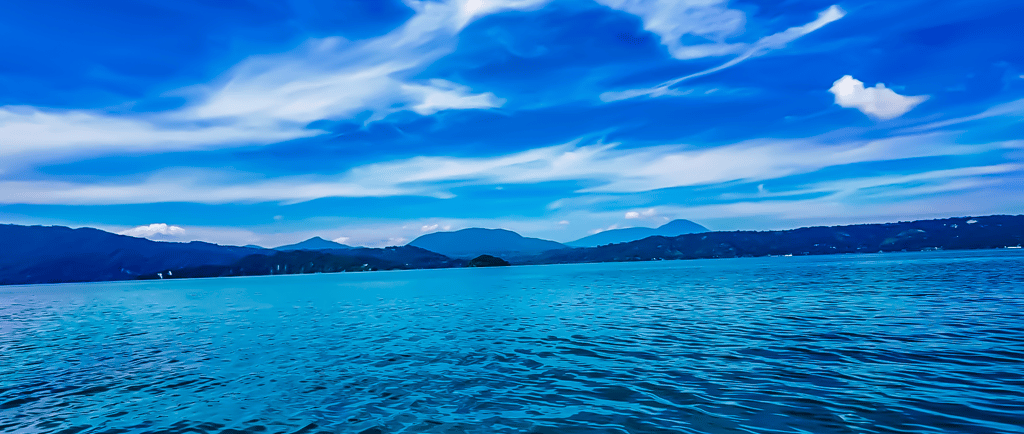
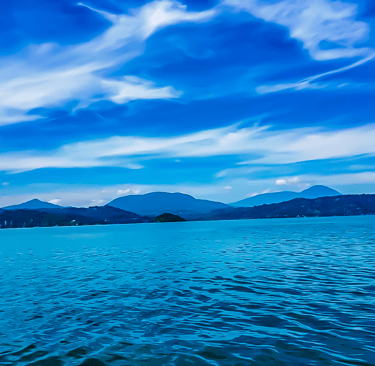
To ride on a boat here is to sit inside the heart of an ancient catastrophe disguised as a modern escape.
Before the restaurants. Before the beaches. Before the laughter drifting across the water.
Before the lake itself—this place was one of the most violent eruptions in human memory.
What looks tranquil today was once the end of the world.
Escaping the City, Entering the Caldera
Today, I set out to visit Lake Ilopango, a shimmering refuge just southeast of San Salvador. Close enough for a day trip, yet distant enough to feel like a reset button, Ilopango offers a rare combination of accessibility and awe.
Reaching the lake by rental car adds freedom—but not ease. The road winds and dips until it seems to dissolve directly into the water, eventually delivering me to Parque Recreativo Apulo, where the shoreline becomes the destination.
Entry is refreshingly simple:
$1 if you walk in
$4 if you drive (ticket + parking)
I’ve already spoken with a boat captain. Several tours circle the lake, priced by duration and route. I choose the $80 option—an hour on the water, three islands, and the possibility of stepping ashore.
I am my entire group.
So yes, it’s $80 just for me.
Worth it.
A Lake That Shouldn’t Exist
Ilopango stretches wide and luminous across a volcanic basin nearly thirty square miles in size. It is El Salvador’s second-largest inland body of water, the deepest of them all, and the largest formed entirely by natural forces.
Its calm surface hides its origin story.
This lake exists because the earth exploded.
Between roughly 410 and 535 CE, Ilopango erupted with unimaginable force. On the Volcanic Explosivity Index, it ranks a 6—placing it among the most catastrophic eruptions of the last 7,000 years. A column of ash and gas shot nearly 20 miles into the sky, tearing the heavens apart.
When a volcano sneezes, the world catches a cold.
Volcanic glass from Ilopango has been found frozen into Greenland’s ice sheets. Sulfur from its breath is preserved in Antarctica. This was not a local disaster—it was planetary.
The eruption collapsed the volcano into a vast caldera. More than 4,000 square miles were buried in ash and pumice, some areas under nearly two feet of debris. Rivers were poisoned. Crops failed. Agriculture collapsed for generations. The sky remained dark for weeks.
The land fell silent.
Earthquakes, Islands, and Memory
As our boat glides across the lake, we pass what was once an island—now reduced to rubble by the devastating 2001 earthquake. A lone cross stands among the rocks, quietly marking lives lost and futures altered.
Nearly 1,000 people died in that quake. Hundreds were never found.
This lake remembers everything.
People swim here. They jump from rocks. They laugh in the blue water. Most never realize they’re floating above layered catastrophes—earthquake over eruption, serenity over apocalypse.
Living on the Ring of Fire means beauty always carries memory.
Stepping Onto Fire Made Solid
The captain lets me step ashore on one of Ilopango’s volcanic islands. Time slows. The lake seems to agree to pause.
Greenery spills over the slopes. Trees bend toward the water. Birds stitch sound through the canopy. These islands are not accidents—they are proof. Each was shaped by fire still stirring beneath the lake’s surface.
This particular island welcomes visitors: smooth stone steps, small beaches, grills waiting for shared meals. It’s a favorite place—meant for rest, celebration, and swimming.
Standing here, surrounded by beauty, it’s impossible to ignore the deeper truth beneath it all.
Peace is not the absence of chaos.
It is what comes after chaos.
The Eruption That Changed History
Before there was a lake, before there was a beach, before there was even land to stand on—this was a giant volcano.
Ilopango’s eruption didn’t just destroy landscapes; it erased civilizations.
Maya settlements across El Salvador were abandoned. The ceremonial center of San Andrés was scarred and left dormant for centuries. Nearby, the village of Joya de Cerén was frozen in time beneath volcanic debris—never reoccupied, its life extinguished in an instant.
Scholars believe Ilopango’s aftermath rippled far beyond this caldera. Ash-darkened skies disrupted global climate patterns. Crops failed. Scarcity bred unrest. Some researchers suggest these disruptions may have contributed to upheaval as far away as Teotihuacan in central Mexico.
Nothing happens in isolation.
Everything is connected.
Serpent Goddesses and Living Water
Long after the eruption, when life crept back over the scars, people returned—carrying memory, fear, and story.
They believed the lake was alive.
An ancient serpent goddess was said to dwell beneath its surface—vast, vengeful, and capable of tearing the sky apart. The eruption was believed to be her wrath made manifest. To keep her appeased, offerings were made: food, jewels, blood.
At first, four maidens.
Later, newborn infants.
When rains fell and crops flourished, it was taken as proof: the goddess was satisfied.
When Spanish conquistadors arrived, they condemned the rituals and claimed to end them—with fire, steel, and the cross. But belief does not vanish so easily. Some say offerings continued in secret coves, under moonlight, the lake watching in silence.
Ilopango sees.
Ilopango remembers.
A Sleeping Force
Ilopango is not finished.
Though its greatest eruption lies deep in antiquity, the volcano has stirred since—forming lava domes within the lake and along its cratered rim. The most recent eruption, less than 150 years ago, registered a VEI 3—a reminder that fire still sleeps beneath the water.
Today, the lake lies calm, reflecting the sky like a sacred mirror.
But serenity here is deceptive.
Beneath this beauty rests a memory of apocalypse—a force that once altered civilizations, silenced kingdoms, and reshaped the world.
Lake Ilopango is a stunning scar of fire hidden in plain sight.
Ever watchful.
And perhaps, one day, ready to wake again.
Would you visit Lake Ilopango—knowing what lies beneath its surface?
Vlogs
Watch the stories that unfold beyond words and photographs.
© 2026. All rights reserved.

Subscribe