Ruta de las Flores: A Journey Through Color, Culture, and Quiet Magic
A journey along El Salvador’s Ruta de las Flores reveals vibrant towns, deep-rooted traditions, and moments of quiet connection—from artisan-filled streets in Nahuizalco to the sacred stillness of Salcoatitán and the lively charm of Juayúa. This story captures how each stop along the route offers something unique, inviting you to slow down and truly experience the heart of the highlands.
4/11/2026
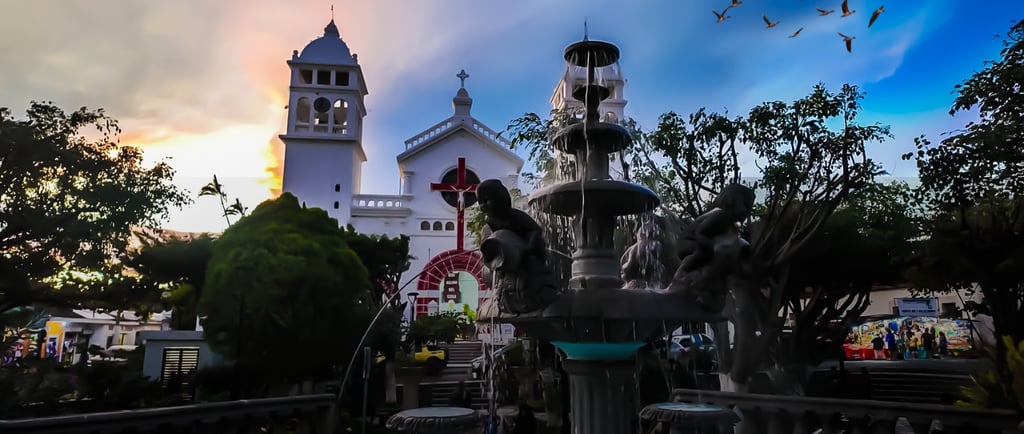
The Ruta de las Flores begins just beyond Sonsonate, winding its way through the cool, green highlands of western El Salvador. Over the course of 21 miles, it connects five colonial towns—Nahuizalco, Salcoatitán, Juayúa, Apaneca, and Concepción de Ataco—each with its own rhythm, its own story, and its own way of inviting you to slow down.
Today, I’m visiting the first three.
Nahuizalco: Where Craftsmanship and Memory Endure
Perched more than 1,700 feet above sea level, Nahuizalco greets you with cool mountain air and a sense of continuity that runs deeper than its streets.
Its name, rooted in Nahuatl, is often translated as “place of the four Izalcos”—a reference to both geography and legacy. Archaeological evidence traces the presence of the Pipil people here back to around 900 CE, and even today, that heritage remains visible in traditional dress, language, and craft.
At the heart of town lies Parque Central de Nahuizalco, where daily life unfolds in an easy rhythm. Vendors sell handmade goods. Conversations drift through the air. And just beyond the park, artisans transform natural materials—tule, wicker, wood, cotton—into baskets, mats, and furniture that feel as timeless as the land itself.
Watching over it all is Iglesia San Juan Bautista, a 17th-century church whose white façade rises with quiet elegance. Inside, the ceiling curves like the hull of an old ship, chandeliers glow softly, and red-and-gray tiles stretch beneath your feet. It is a place where time doesn’t stop—but it does soften.
Nahuizalco doesn’t demand attention.
It earns it.
Salcoatitán: The Ceiba and the Silence
A short drive later, the road leads into Salcoatitán.
And at its entrance stands something extraordinary.
A ceiba tree.
Ancient. Towering. Still.
For generations, this tree has been more than a part of the landscape—it has been a bridge between worlds. In Mayan belief, the ceiba connects the heavens, the earth, and the underworld. The Pipil carried that reverence forward, believing the tree holds a soul—one that listens, one that sees.
Standing beneath it, you don’t need language.
You don’t even need words.
Just stillness.
Just breath.
A Town That Invites, Not Impresses
Salcoatitán, whose name is often interpreted as “City of Quetzalcóatl,” sits at nearly 3,500 feet above sea level. The air is cool, the pace is slow, and the town unfolds quietly.
In Parque Central de Salcoatitán, mosaic murals line the streets, flowers spill from balconies, and small galleries offer glimpses into the town’s artistic soul.
Facing the park is a modest colonial church—simple, grounded, and filled with quiet reverence. Inside, walnut pews rest beneath soft light filtering through stained glass, and the atmosphere feels lived-in rather than staged.
Salcoatitán doesn’t try to impress you.
It simply lets you notice.
The Taste of Tradition
And then there’s the yucca.
Everyone says you have to try it.
They’re right.
Prepared over wood fire, then fried, and served with a bold, spicy sauce—it’s simple, rustic, and deeply tied to the land.
Mine arrived with meat at first (a brief moment of panic), but once corrected, it became one of the most authentic—and unexpectedly delicious—experiences of the day.
For $2, it wasn’t just a meal.
It was a moment.
Location: Yuquería Wendy, R6HV+Q3J, C. Central Ote., Salcoatitán, El Salvador
Juayúa: Where Energy Meets Atmosphere
Further along the route, Juayúa introduces a different energy.
Still cool. Still beautiful.
But busier. More vibrant. More alive.
Surrounded by coffee plantations and mountain springs, Juayúa blends natural beauty with a lively cultural scene—murals, markets, and food that seems to call out from every corner.
At its center, the park hums with activity, while across from it stands the parish church of Santa Lucía—a place where music fills the air and time seems to stretch just enough for you to linger.
I visited four times.
Every time, there was a service.
At some point, you realize:
This isn’t a place you interrupt.
It’s a place you witness.
Here, I will spend the night in an apartment.
A Moment of Comfort (and Tofu)
After a long day, I returned to my apartment—colorful, comfortable, and thoughtfully prepared. My name written on a whiteboard. A small detail that somehow meant everything.
And then, finally:
Tofu.
At a small Asian restaurant, I ordered General Tso’s tofu and sat overlooking the town as the air turned cooler and the wind picked up.
It was perfect.
The kind of meal you don’t rush.
The kind of moment you remember.
Location: Dragón de Juayua, R7V3+CF8, Juayúa, El Salvador
The First Day, and the Feeling That Follows
As night settled over Juayúa, I realized something.
The Ruta de las Flores isn’t just a scenic drive.
It’s a series of invitations.
To slow down.
To notice.
To listen.
Each town offers something different—craft, tradition, silence, flavor—but together, they create something deeper.
Not just a journey through places.
But a journey through feeling.
And this is only the beginning.
Tomorrow, the road continues.
Vlogs
Watch the stories that unfold beyond words and photographs.
© 2026. All rights reserved.

Subscribe