Turning My Brain Off in San Salvador (and Failing Gloriously)
A quiet day in San Salvador unfolds into a powerful journey through anthropology, art, history, and vertigo-inducing views, revealing a city defined not by answers, but by perseverance, memory, and ongoing transformation.
EL SALVADOR
12/20/2025
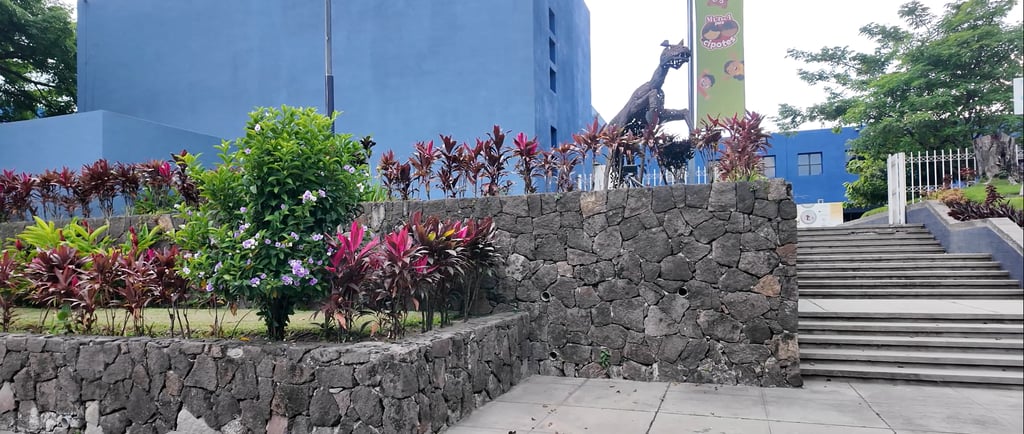
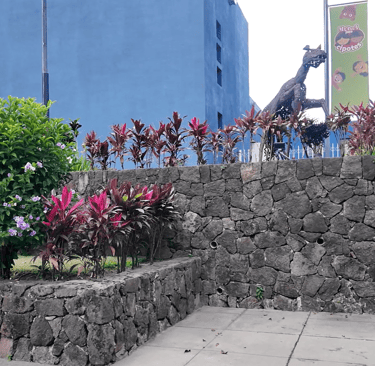
I finished all my work early today—and somehow the sun was still out. A rare, beautiful miracle. The kind that gifts you a few golden hours and dares you to use them wisely.
Now, I fully understand that my idea of fun is… niche. Possibly concerning. But I made a plan anyway: a slow, quiet day. No rushing. No checklist. Just museums, reflection, and seeing the things I missed when doors were closed and time ran out.
I wanted to turn my brain off.
Instead, San Salvador had other ideas.
Memory Made Visible at MUNA
Tucked into the heart of the city, the Museo Nacional de Antropología David J. Guzmán—better known as MUNA—doesn’t announce itself loudly. It welcomes you with open space, art, and a sense of calm that feels deliberate, almost ceremonial.
Founded in 1883 through the collaboration of President Rafael Zaldívar and scholar David J. Guzmán, MUNA has become the country’s foremost guardian of cultural memory. Admission for foreign visitors is $10, credit cards accepted—and before you even step inside, the grounds prepare you for what’s coming.
At the center of the courtyard stretches a monumental mural, alive with color and symbolism. It traces El Salvador’s journey from pre-Columbian civilizations through conquest, conflict, resilience, and renewal. It’s not just decoration—it’s a compass.
When Music Was Sacred
One of the most arresting exhibits is the pre-Hispanic music collection. Whistles, flutes, drums, and tepunahuastes—large ceremonial slit drums—crafted in the shapes of animals and humans: monkeys, dogs, turtles, armadillos.
Music here wasn’t entertainment. It was intention.
These instruments come from major archaeological sites linked to the Lenca, Maya, and Pipil peoples—places like Chalchuapa, Cara Sucia, and Quelepa. They weren’t just played; they were made locally. Organized. Purposeful. Sacred.
Standing there, surrounded by silent instruments, one truth echoes clearly: even if the songs are lost, the meaning remains.
Jaguars at the Threshold
From Quelepa comes one of MUNA’s most powerful artifacts—the Jaguar Altar. Carved with three feline faces, it feels like a guardian of something just beyond reach. The jaguar, a symbol of power and liminality, stands between worlds.
Though unique to Quelepa, its style echoes distant sites like Izapa and Kaminaljuyú, revealing Olmec influence and reminding you that Mesoamerica was never isolated. It was a network—of trade, belief, and shared cosmology.
Life, Death, and Transformation
The final gallery explores sacrifice, burial, and belief—heavy topics, but not a dark room. At its center stands a life-sized figure of Xipe Tótec, a god of renewal whose mythology framed death not as an ending, but as transformation.
To modern eyes, these rituals are unsettling. To the people who practiced them, they were about balance. About planting. About survival.
Life and death were never opposites here. They were partners.
Walking out of MUNA, I realized something: El Salvador doesn’t tell its story as a straight line. It tells it as a cycle.
Art That Refuses to Forget
Just down the road sits the Museo de Arte de El Salvador, known as MARTE. Admission is $5, but the art begins outside—sculptures, open spaces, and creativity spilling into the grounds.
Inside, the galleries unfold El Salvador’s story chronologically. Early colonial maps show a land imagined as wild and dangerous, filled with real animals and mythical beasts. These weren’t maps of understanding—they were maps of projection.
As the narrative moves into the Coffee Republic era, the focus shifts to the human cost: campesinos sustaining wealth they would never see. Then comes the crucified farmer—an image that carries the weight of 1932, of Feliciano Ama, of Farabundo Martí, of unnamed lives erased.
From modernization to coups, from abstract experimentation to the raw visual language of civil war, the art doesn’t soften the truth. The war years—1980 to 1992—linger heavily. Bodies still being uncovered. Stories still incomplete.
And yet, creativity never stopped.
Postwar art grapples with memory, trauma, and the fragile promises of peace. By the 21st century, new generations of artists begin asking not just what went wrong, but what comes next?
What struck me most was the honesty. No triumphal ending. No clean resolution. Just reckoning.
Facing the Sky (Against My Better Judgment)
By late afternoon, I found myself staring up at the Millennium Tower, completed in 2022 and rising over 400 feet—the tallest building in El Salvador.
For $10 (and a noticeable pop in my ears), I ascended to the observatory. My drink of choice? La Siguanaba—named after one of El Salvador’s most famous folkloric figures and, conveniently, one of my imaginary emotional support friends.
Here’s the problem: I am terrified of heights.
I love views. I just prefer them seated. With a drink. Far from transparent floors.
The Sky Deck includes a clear glass platform that lets you look straight down. Four hundred feet. Beneath your actual feet.
I stared. I questioned the scuff marks. I whispered a prayer. My soul briefly exited my body.
And then—I survived.
What I Learned (Despite My Best Efforts)
I failed spectacularly at turning my brain off.
Instead, I ended the day with more questions than answers—and maybe that’s the point. San Salvador doesn’t hand you a tidy definition of itself. It asks you to sit with complexity.
History here isn’t buried. Art doesn’t decorate—it remembers. Innovation doesn’t erase the past; it rises alongside it.
If I had to choose one word for the spirit of this city, it would be perseverance.
So for the rest of my time in El Salvador, I’ll listen more than I speak. Observe without rushing. And let the country reveal itself in its own time.
Travel isn’t about arriving with certainty.
It’s about leaving with respect.
Vlogs
Watch the stories that unfold beyond words and photographs.
© 2026. All rights reserved.

Subscribe